
Additional information
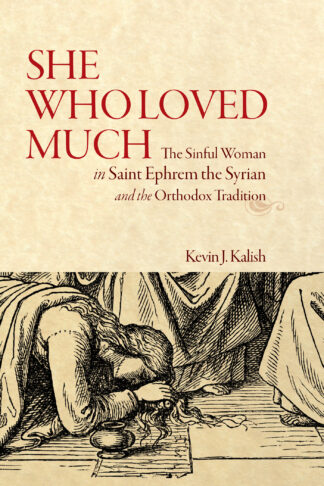
| Author Name | Kevin James Kalish |
|---|---|
| Format | ED |
| Publication Date | 20220906 |
| Imprint | |
| Publisher | |
| Language | English |
| Book Dimensions | 0 |
| Format Detail | eBook |
$19.99
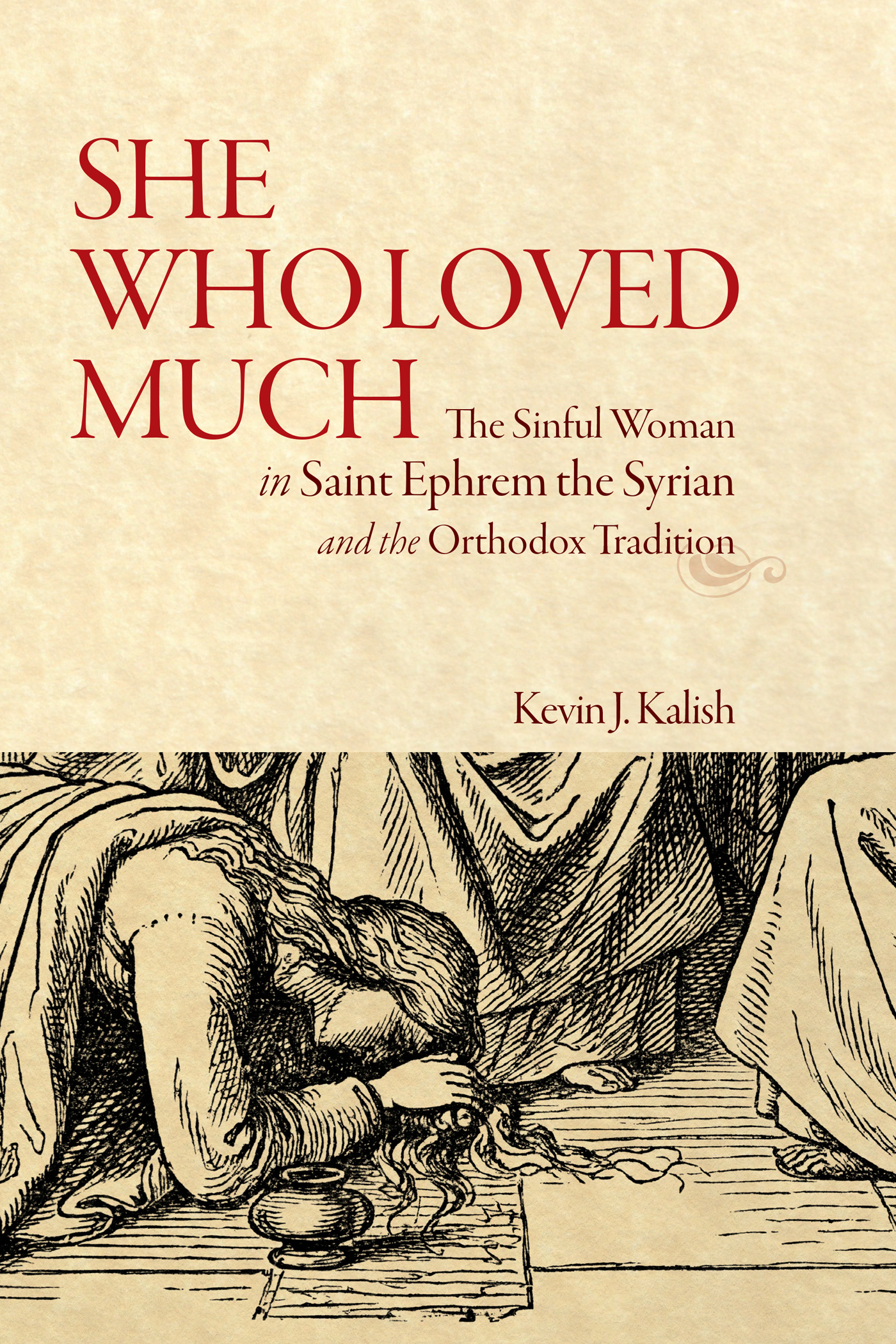
This sharply honed and well-constructed work brings
to the fore and explores the New Testament story regarding the woman who entered
a house where Jesus was dining and anointed him with precious oil shortly before
His Passion and Crucifixion. The author unveils the intricate nature of the
tradition of the Church that gives the woman a voice and elucidates her
backstory through its liturgical poetry, oratory, and other writings. Scholarly
consideration is given to all these sources in addressing questions such as:
Who was this woman? Where did she come from? How did she acquire the precious
oil? How did she enter into the house of Simon uninvited? How did she perceive
her own bold actions?
The reader will learn that in the liturgical tradition of the Orthodox
Church, as found in the hymnology of Holy Week, this sinful woman is shown to be
an example of repentance and unconstrained love. The intricate nature of the
hymns and homilies of the Orthodox Church give greater scope and application to
the biblical record primarily in Greek and Syriac manuscripts, with particular
attention given to the former texts, too often overshadowed by the latter. The
author shares previously inaccessible texts of late antiquity such as homilies
by Amphilochius of Iconium and Ephrem Graecus found here in
English for the first time.
This in-depth and readable study will engage those who encounter the
story of the sinful woman in the living tradition of worship within the Orthodox
Church, together with those who have encountered this story in Scripture, or in
the course of their academic studies.
| Author Name | Kevin James Kalish |
|---|---|
| Format | ED |
| Publication Date | 20220906 |
| Imprint | |
| Publisher | |
| Language | English |
| Book Dimensions | 0 |
| Format Detail | eBook |
Preface
Abbreviations
Short Titles and a Note on Texts
PART I – Earliest Developments of the Sinful Woman’s Story
1 – Introduction
Luke 7:36–50
The Story of the Sinful Woman
The Gospel Accounts
How Many Women? Mary Magdalene?
Filling in the Gaps
Genres of Early Christian Writing: Homily, Apocrypha, Hagiography,
Greek Novel, Hymn
Ways of Story-telling
Scope
Plan of the Book
Central Argument
2 – Ephrem
the Syrian and the Syriac Tradition
Introduction
Christianity and the World of Late Antiquity
Ephrem and the Beginning of Christian Poetry
Ephrem the Syrian’s Verse Homily On the Sinful
Woman
Ephrem the Syrian’s Invention of the Myrrh-Seller
3 – Amphilochius of Iconium, the Neglected
Cappadocian
Introduction
Amphilochius of Iconium, On the Sinful Woman Who Anointed the
Lord with Myrrh; and on the Pharisee (Homily
4)
The Sinful Woman and Judas: Amphilochius’s use of Biblical
Models
Interior Monologue
Shamelessness Transformed into Boldness
PART II – Greek Ephrem’s Homily on the Repentant Harlot
4 – Phenomenon of the Greek Ephrem
Introduction
Meeting of Basil and Ephrem
Overview of the Homily
5 – Translation of Greek Ephrem’s Homily The Repentant
Harlot
Prologue
Her Thoughts and Plans
Encounter with the Myrrh-seller
The Woman Prepares Herself to Enter
Arrival at House of Simon
Reflection by the Homilist
Simon’s Doubts and the Parable of the Debtors
6 – Significance of Greek Ephrem’s Homily The
Repentant Harlot
Voice of the Homilist
Imagining her Voice: Silent Speech, Interiority, the Self, and the
Power of Fiction
Dialogue with the Myrrh-seller
Wounded by the Beauty of Christ
Encounter with Christ
The Parable of the Two Debtors: Will or Ought to Love?
PART III – The Sinful Woman as a Model of Repentance
7 – Romanos’s
On the Harlot
Romanos Introduction
Translation of the kontakion
Romanos “On the Harlot” Commentary
8 – The
Sinful Woman in the Lenten Triodion
Introduction
Development of the Lenten Tridoion
The Sinful Woman in the Triodion Hymns
The Sinful Woman in the Great Canon of St. Andrew of Crete
Holy Week and Greek Ephrem’s The Repentant
Harlot
Hymn of Kassia the Nun
9 – Conclusion
Why the Sinful Woman? Boldness, Continual Repentance, and Perfect
Love
Holy Harlots
Continual Repentance
Sinful Woman and Perfect Love
APPENDIX I: Literary Context
Late Antique Rhetorical Practices
APPENDIX II:
Longer Version of Greek Ephrem’s Homily The Repentant
Harlot (Recension B)
Acknowledgments
Notes
Glossary of Names
Bibliography
Index